The answer depends on the type of website you need, the features you want, the development approach you choose, and the level of support required after launch.
A simple brochure website for a small business can cost significantly less than a custom eCommerce platform, membership website, or complex web application. This is why website development quotes can vary from a few hundred pounds to tens of thousands of pounds.
For most UK businesses, the important thing is not simply finding the cheapest possible website. The better question is:
What type of website will provide the right functionality, professional appearance, performance, and long-term value for my business?
This guide explains the typical web development cost in UK businesses may encounter in 2026, what influences pricing, what is usually included in a development project, and how to create a realistic website budget.
If you are considering a new website and want to discuss your requirements, NextMark UK can help you understand the right development approach for your business before you commit to a project.
Website Development Cost UK: Quick Overview
The cost of website development in the UK can vary considerably depending on project requirements.
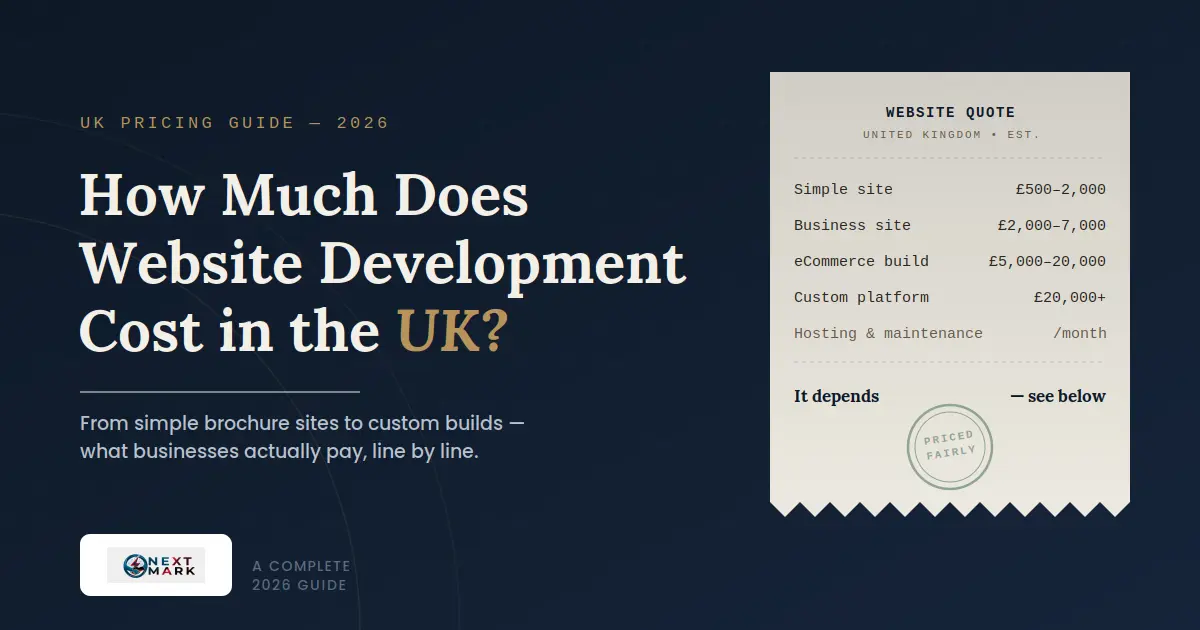
As a general guide, businesses may encounter the following approximate project ranges:
| Website Type | Typical UK Development Range |
|---|---|
| Basic DIY Website | £100 – £1,000+ |
| Simple Small Business Website | £1,000 – £3,000+ |
| Professional Business Website | £2,000 – £8,000+ |
| Custom Website | £5,000 – £20,000+ |
| eCommerce Website | £3,000 – £25,000+ |
| Complex Web Application | £15,000+ |
These figures are general planning ranges rather than fixed prices. The final cost depends on the website's design, functionality, number of pages, content requirements, integrations, development platform, and ongoing support.
A five-page website with standard contact forms is a very different project from a custom platform with user accounts, payment processing, automated systems, and third-party integrations.
What Is the Average Website Development Cost in the UK?
For many small and medium-sized businesses, a professional website development project may cost anywhere from approximately £1,000 to £8,000 or more, depending on the project scope.
A basic website may include:
- A homepage
- About page
- Services pages
- Contact page
- Mobile responsiveness
- Contact forms
- Basic content management functionality
A more advanced website may include:
- Custom design
- Multiple service sections
- Advanced forms
- Booking systems
- Payment functionality
- Customer accounts
- API integrations
- Custom dashboards
- Advanced content management
- Technical SEO foundations
- Bespoke functionality
The most important factor is therefore not simply the number of pages. A website with ten simple pages may be easier and cheaper to build than a five-page website requiring complex functionality.
Website Development Cost by Website Type
Different websites require different levels of planning, design, development, testing, and maintenance.
Understanding the type of website you need is one of the best ways to estimate your potential website development cost in the UK.
1. Basic DIY Website: £100 to £1,000+
DIY website builders can be an affordable option for individuals and very small businesses.
These platforms usually provide:
- Pre-designed templates
- Drag-and-drop editing
- Hosting options
- Basic pages
- Contact forms
- Simple business features
The initial cost may appear low, but you may still need to pay for:
- Domain registration
- Premium templates
- Additional features
- Business email
- Premium plugins
- Ongoing subscriptions
A DIY website can work well for a very simple project. However, it may become limiting when you need a more unique design, stronger performance, advanced functionality, or a website built specifically around your business goals.
2. Small Business Website: £1,000 to £3,000+
A small business website is often one of the most common website development projects in the UK.
This type of website may include:
- A professional homepage
- About page
- Service pages
- Contact page
- Mobile-friendly design
- Basic content management system
- Contact forms
- Basic performance optimisation
The final cost depends on whether the website uses a customised template or is designed and developed specifically for the business.
For example, a local service business may need a website that clearly explains its services and encourages visitors to call, submit an enquiry, or request a consultation.
In this situation, the website should not only look professional. Its structure should also support usability and future marketing activities.
3. Professional Business Website: £2,000 to £8,000+
A professional business website usually involves more planning and customisation.
This option may be suitable for:
- Established businesses
- Professional service companies
- Growing brands
- B2B companies
- Local businesses targeting competitive markets
- Companies replacing an outdated website
A professional website development project may include:
- Custom or highly customised design
- Conversion-focused page structure
- Multiple service pages
- Responsive layouts
- Content management functionality
- Custom forms
- Basic technical SEO setup
- Analytics integration
- Performance optimisation
- Security configuration
The development process may also include more detailed planning before the website is built.
This is important because poor planning can create expensive problems later. Changing the structure of a website after development has started can require additional time and development work.
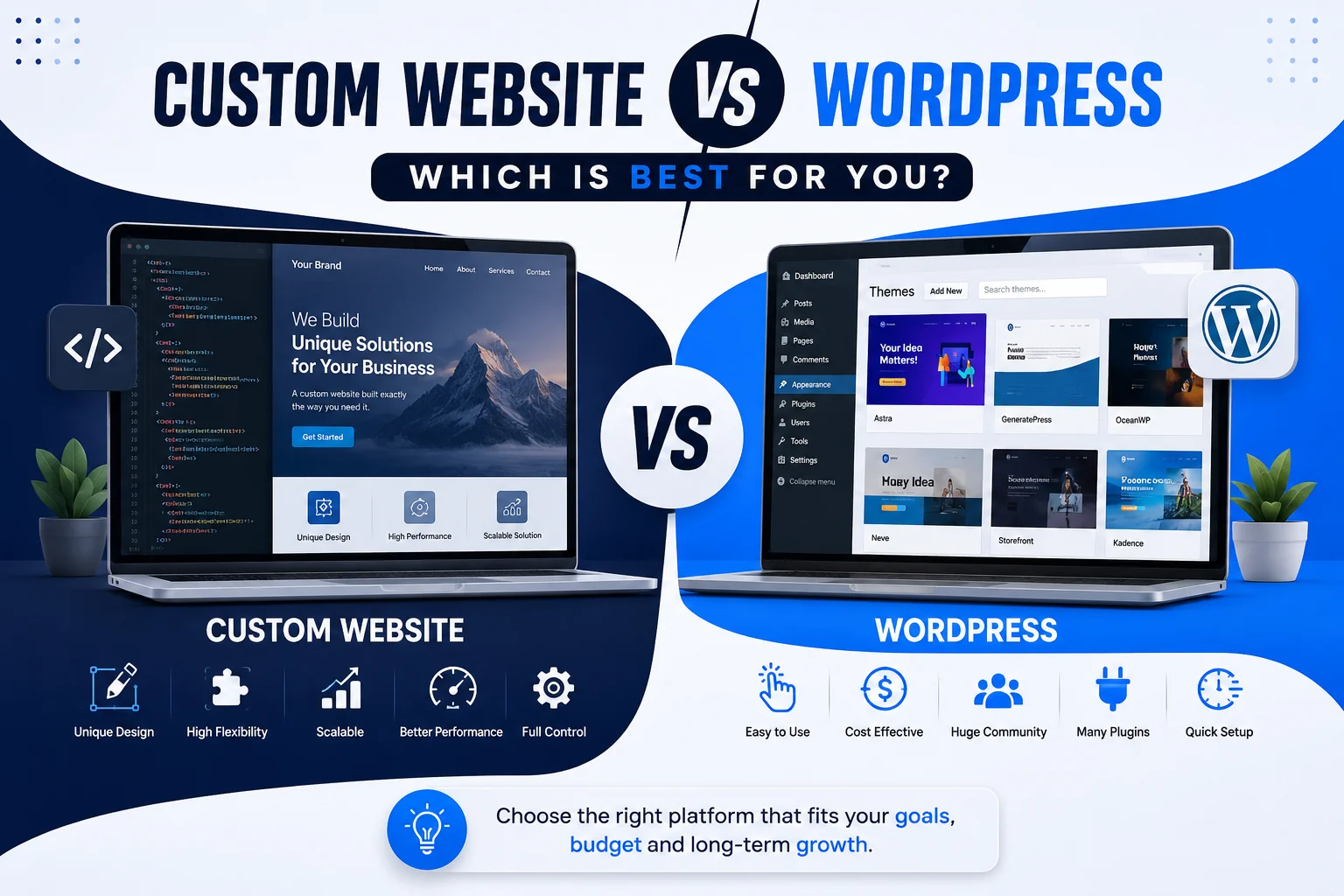
4. Custom Website Development: £5,000 to £20,000+
A custom website is developed around specific business requirements rather than relying primarily on a standard template.
The custom website development cost UK businesses pay can vary significantly depending on the complexity of the project.
Custom development may be necessary when a business needs:
- Unique user experiences
- Bespoke functionality
- Custom dashboards
- User registration systems
- Advanced search functionality
- Third-party integrations
- Custom databases
- Automated workflows
- Custom payment processes
A custom website can provide more flexibility, but it also requires more planning, testing, and development time.
Businesses should be careful when comparing a custom website quote with the price of a basic template website. These are not equivalent projects.
5. eCommerce Website Development: £3,000 to £25,000+
The cost of building an eCommerce website can vary widely.
A small online shop with a limited number of products may be relatively straightforward. A larger eCommerce platform with thousands of products and complex systems can require significantly more development work.
Potential eCommerce features include:
- Product catalogues
- Shopping carts
- Online payments
- Customer accounts
- Stock management
- Discount codes
- Shipping systems
- Order management
- Product filtering
- Customer notifications
- Third-party integrations
The cost may also depend on the number of products and how product information is managed.
For example, adding ten products manually is very different from importing thousands of products from an existing database.
A business should therefore define its eCommerce requirements before requesting development quotes.
What Factors Affect Website Development Cost in the UK?
Several factors can influence the final website development cost UK businesses need to budget for.
Website Size
The number of pages can affect the amount of planning, design, content preparation, and development required.
However, page count alone does not determine the total cost.
A website with a small number of complex pages may require more work than a larger website with simple content pages.
Design Requirements
A standard template usually requires less design work than a fully customised website.
Custom design may involve:
- Wireframes
- Layout planning
- Brand integration
- Custom user interface elements
- Desktop designs
- Mobile designs
- Multiple rounds of revisions
The more customised the design, the more time may be required before development begins.
Functionality
Functionality is one of the biggest factors affecting website development pricing.
Examples include:
- Contact forms
- Booking systems
- Customer logins
- Payment gateways
- Membership systems
- Calculators
- Search tools
- Advanced filters
- API connections
A simple contact form may be quick to implement. A booking system connected to external software may require much more technical work.
Content
Some development projects include content creation, while others require the client to provide all website content.
You may need to budget for:
- Website copywriting
- Product descriptions
- Photography
- Graphic design
- Video
- Blog content
Professional content can improve the quality and usability of a website, but it may be priced separately from development.
Integrations
Businesses often need their website to connect with other systems.
Examples include:
- CRM platforms
- Email marketing tools
- Payment systems
- Booking software
- Accounting platforms
- Inventory systems
- Customer support tools
Each integration may require technical configuration and testing.
Technical Requirements
The technical requirements of a project can also affect the budget.
For example, a website may require:
- Custom databases
- Advanced security
- Multiple user roles
- Server-side functionality
- Custom APIs
- Performance optimisation
- Complex data management
These requirements should be discussed during the planning stage.
Freelancer vs Agency: Which Can Offer Better Value?
When researching the cost of website development in the UK, many businesses compare freelancers and agencies.
Both options can be suitable, depending on the project.
Hiring a Freelancer
A freelancer may be suitable for:
- Smaller projects
- Simple websites
- Limited budgets
- Businesses that need one specialist
Freelancers can sometimes offer lower development costs because they have lower overheads.
However, the available skills and support may depend on one individual.
Hiring a Web Development Agency
An agency may be more suitable for:
- Larger projects
- Custom websites
- Businesses requiring multiple services
- Complex integrations
- Long-term development support
An agency may provide access to different skills, such as:
- Developers
- Designers
- SEO specialists
- Content professionals
- Project managers
The most important point is to compare what is included, rather than simply comparing the headline price.
A cheaper quote may not include important services that another provider has included as standard.
What Should Be Included in a Website Development Quote?
Before approving a website project, ask for a clear breakdown of the proposed work.
A professional quote should ideally explain:
Project Scope
The quote should describe what is being built.
This may include:
- Number of pages
- Website features
- Functionality
- Development platform
- Integrations
Design Work
The proposal should explain whether the design is:
- Template-based
- Customised
- Fully bespoke
It should also clarify how revisions are handled.
Content Responsibilities
The quote should explain who is responsible for:
- Website copy
- Images
- Product information
- Brand assets
Testing
Website testing may include:
- Mobile testing
- Browser testing
- Form testing
- Functionality testing
- Performance checks
Launch
The project should explain what happens when the website is ready to go live.
Post-Launch Support
Ask whether the project includes:
- Bug fixes
- Training
- Technical support
- Maintenance
A clear scope can help prevent misunderstandings and unexpected costs.
Additional Website Costs Businesses Should Consider
The initial development price is not always the complete cost of owning a website.
Domain Name
Your domain name is your website address.
Domain costs depend on:
- The extension
- The registrar
- Renewal pricing
Common extensions may include .co.uk and .com.
Hosting
Website hosting stores your website files and makes them accessible online.
Hosting prices vary based on:
- Server resources
- Website traffic
- Performance requirements
- Security features
- Support level
A simple website may require basic hosting, while a high-traffic website may need more advanced infrastructure.
Business Email
Many businesses also need professional email addresses connected to their domain.
This may involve a separate monthly or annual subscription.
Website Maintenance
Ongoing maintenance can include:
- Software updates
- Security monitoring
- Backups
- Bug fixes
- Content changes
- Technical improvements
Some businesses manage maintenance internally. Others choose a monthly support plan.
Future Development
Websites often evolve as businesses grow.
Future development may include:
- New pages
- New features
- New integrations
- Improved user journeys
- New payment functionality
It is often useful to consider future requirements during the initial planning stage.
How Much Should a Small UK Business Budget for a Website?
The right budget depends on the business and its objectives.
A business that only needs a simple online presence may not require a complex custom platform.
However, a business that relies on its website to generate leads may need to invest more carefully in:
- Professional design
- Clear service pages
- Mobile usability
- Fast performance
- Strong website structure
- Conversion-focused content
A practical approach is to first define:
- What the website must do
- Who will use it
- What actions visitors should take
- Which features are essential
- Which features can be added later
This prevents businesses from paying for unnecessary functionality while ensuring that important requirements are not ignored.
How to Reduce Website Development Costs Without Sacrificing Quality
A limited budget does not automatically mean that you need a poor-quality website.
Here are some practical ways to control costs.
Start With Essential Features
Focus on the functionality your business needs now.
Additional features can sometimes be added later.
Prepare Content Early
Delays often occur when website content is not ready.
Preparing your:
- Logo
- Brand information
- Service details
- Images
- Business information
can help make the development process more efficient.
Use a Scalable Approach
Instead of building every possible feature from the beginning, consider creating a strong first version that can grow over time.
This may be more cost-effective for startups and smaller businesses.
Avoid Choosing Based Only on Price
The cheapest quote is not always the best value.
A low-cost website may result in additional expenses if:
- The website is difficult to update
- The design is not suitable for your audience
- The code requires major changes
- Important functionality is missing
The better approach is to compare the total value and project scope.
Common Mistakes When Budgeting for Website Development
Mistake 1: Focusing Only on the Initial Price
The development fee is only one part of the overall website investment.
Remember to consider:
- Hosting
- Domain renewal
- Maintenance
- Content
- Future improvements
Mistake 2: Not Defining the Project Scope
Unclear requirements can lead to additional charges.
Before development begins, define what is included.
Mistake 3: Adding Too Many Features
Some businesses request features that they do not actually need.
Every feature should serve a clear business or user purpose.
Mistake 4: Ignoring Mobile Users
A website should be designed to work effectively across different screen sizes.
Mobile usability is especially important because many users access websites from smartphones.
Mistake 5: Choosing a Website That Cannot Grow
A website should ideally support the future direction of the business.
A very basic setup may become expensive to replace if the business grows quickly.
Is Investing More in Website Development Worth It?
The answer depends on how important the website is to your business.
For some businesses, a website is simply an online business card.
For others, it is a major source of:
- Leads
- Sales
- Enquiries
- Bookings
- Customer information
If your website plays an important role in generating business, quality development can provide greater long-term value.
A professional website should help visitors understand:
- What your business does
- Who you help
- Why they should choose you
- What they should do next
This is why the cheapest option is not always the most affordable option in the long term.
A website that fails to support your business goals may require expensive redevelopment later.
How to Choose the Right Website Development Option
Before selecting a developer or agency, consider the following questions:
What is the main purpose of the website?
Is it designed to:
- Generate leads?
- Sell products?
- Provide information?
- Accept bookings?
- Support an existing business?
What functionality is essential?
Separate essential features from optional features.
What is your realistic budget?
A clear budget can help developers recommend a suitable solution.
Do you need ongoing support?
Some businesses need regular updates and technical assistance.
Can the website grow with your business?
Consider future requirements before choosing a platform or development approach.
What does the provider actually include?
Always review the project scope carefully.
Why Professional Website Development Can Be a Long-Term Investment
A website is often one of the first places potential customers interact with a business.
A professional website can help create a stronger online presence by providing:
- Clear information
- Better user experience
- Stronger brand presentation
- Easier communication
- Improved mobile usability
- A platform for future marketing
However, the value of a website depends on how well it is planned and developed.
The best website is not necessarily the one with the most features.
It is the one that provides the right experience for the target audience and supports the business's actual goals.
Get a Website Development Cost Estimate for Your UK Business
There is no single fixed answer to the question "How much does website development cost in the UK?"
A basic website may require a relatively modest investment, while a custom website or eCommerce platform can require a much larger budget.
The right price depends on:
- Your business goals
- Website size
- Design requirements
- Features
- Integrations
- Content
- Technical complexity
- Ongoing support
The best way to get an accurate estimate is to define your requirements and discuss them with an experienced website development professional.
If you are planning a new website or want to improve an existing one, NextMark UK can help you explore the right development approach for your business. Contact NextMark UK for a consultation and discuss your website goals, required features, budget, and potential development options.
A clear conversation at the beginning can help you make a more informed decision and avoid paying for features your business does not actually need.